
IDLE HANDS
Stop doomscrolling. Get your hands in dirt and dough. Make something.

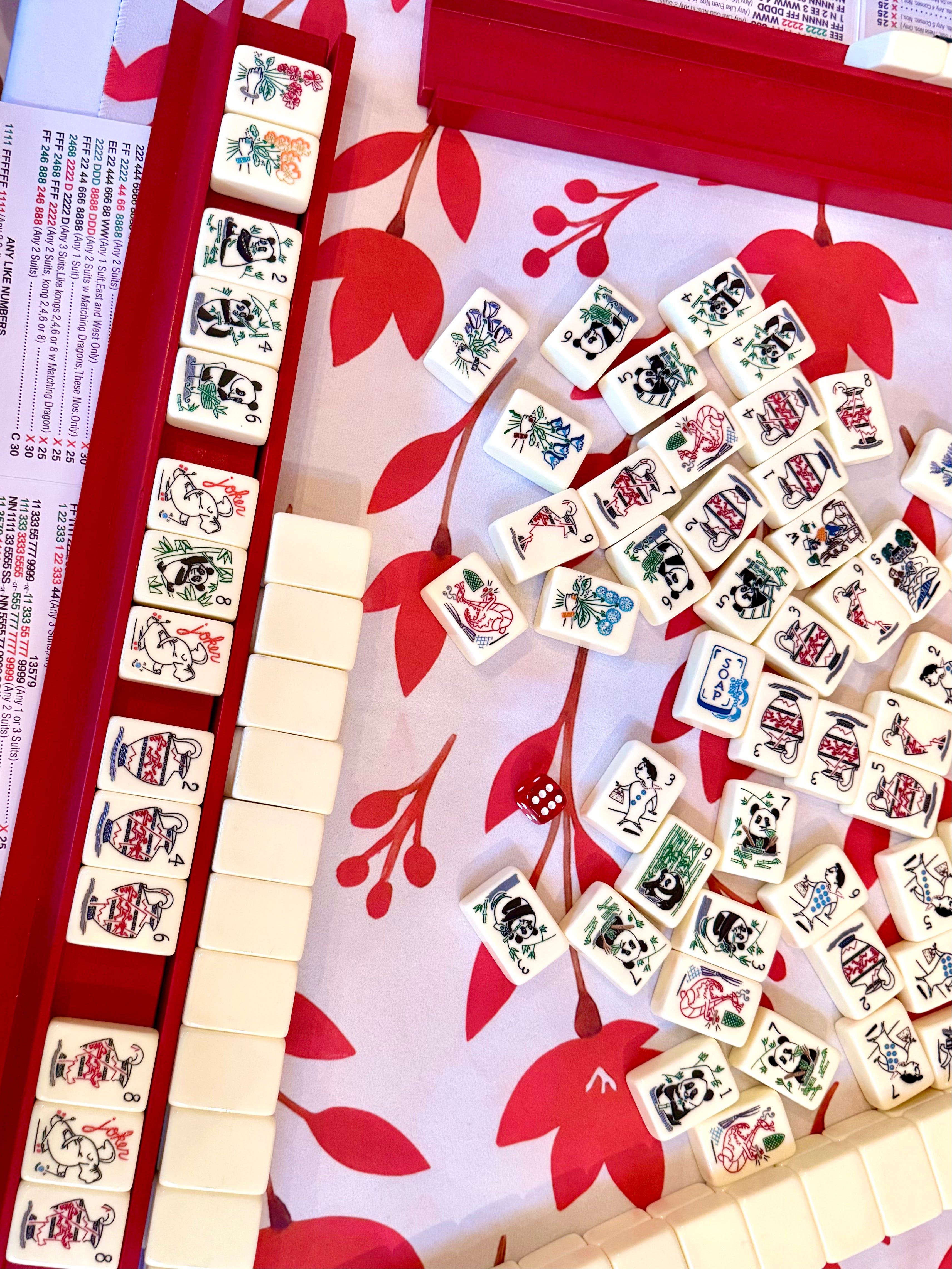
Not an essay about mahjong, but definitely something for idle hands and its really pretty!
Remember that saying — idle hands are the devil’s workshop?
The Puritans weren’t wrong exactly. Hands without a task will find trouble — or worse, they’ll just scroll. But the Puritan solution — keep busy, stay productive, treat rest as moral failure — was never really my philosophy. But there is some truth to this.
I think I always knew, somewhere underneath, that the hands and the mind are not separate. It’s there in Buddhist practice — monks raking sand gardens, nuns folding cranes, Thich Nhat Hanh writing about washing dishes not as a chore to get through but as the practice itself. Not quieting the mind from the outside, but recognizing that humble, close-ended, physical work is a form of attention. A form of restoration. You don’t rest from the work. You restore yourself through a different kind of it.
I grew up Thai Buddhist, and knowing something and remembering it are different things. Sometimes you have to weed a courtyard and bake biscuits you’ve never attempted before to find your way back to what you already knew.
There’s a specific kind of restlessness that comes after finishing something big. Not laziness — the opposite. A charged stillness where you’re too depleted to create but too wired to stop. Last week I turned in two writing assignments, completed a freelance job, locked a final cut on a documentary short, and delivered a rough cut on a feature documentary — all in the span of two weeks. It sounds triumphant, and it was. For about forty-five minutes. Then came the what-do-I-do-with-myself moment when you’re too restless to sit still.
The answer, I decided, was not my phone. It was dough. It was dirt. It was a courtyard divided into six quadrants with a weed problem and a plan.
Think of it like switching train tracks. The bullet train of narrative construction and editorial judgment runs so fast the landscape becomes a blur. Sometimes you need to move onto a slower track. Not to stop. To actually see the scenery again.
Here’s the thing about the kind of work I do: writing, directing, and editing run on a very specific cognitive track. Narrative construction. Judgment. Language. Decision-making. After a sustained period of output, that engine isn’t just tired — it’s hot. You know how your iPhone won’t charge when it’s overheated? It still needs to charge, it’s just physically unable to until it cools down.
That was me.
Weeding is a problem to solve. Gardening is a system to build. Baking is a small act of faith. But they’re all close-ended tasks that live in the body — in your hands, your eyes, your nose — with an expected outcome that doesn’t require philosophical heavy lifting to reach. The curiosity stays lit: will the biscuits rise? Will the massaman work on a white pizza? Have I finally gotten ahead of the weeds? But the stakes are low and the track is slower, and your mind can wander, replenish, and breathe.
And here’s the thing I didn’t expect to feel so strongly: the accomplishment counts. My biscuits will not be reviewed. My tomato seedlings will not affect the cultural conversation. My weeded courtyard will be seen by, at most, a handful of people who come over for dinner. And that is completely okay.
The scale is different. The validity isn’t.
This is what my hands knew that my exhausted brain had temporarily forgotten: making things matters, even when — maybe especially when — the audience is just you, and a few people you love.
The Courtyard Problem
My Santa Monica courtyard is a small brick square that I genuinely love and chronically neglect. Between the bricks, over the winter and rainy spring, an entire civilization of grass and weeds had established itself. Not cute weeds. Tenacious, ugly little invaders in every crack.
The prospect of weeding the whole thing had been so overwhelming I’d been ignoring it for weeks. But I knew if I didn’t take care of it by May, there would be no chance of a summer garden. Every day I walked out of my house, the jungle was there to greet me.
So here’s the reframe that changed everything: I divided the courtyard into six quadrants and gave myself one rule — 45 minutes per quadrant, one quadrant per day.
That’s it. That’s the whole system.
Day one: Quadrant One cleared. Absurdly accomplished.
By Day Six, the whole courtyard was done, and I had created the proper conditions for what I actually wanted — a summer vegetable garden. Eggplant, hot peppers, and tomatoes. But not just any tomatoes.
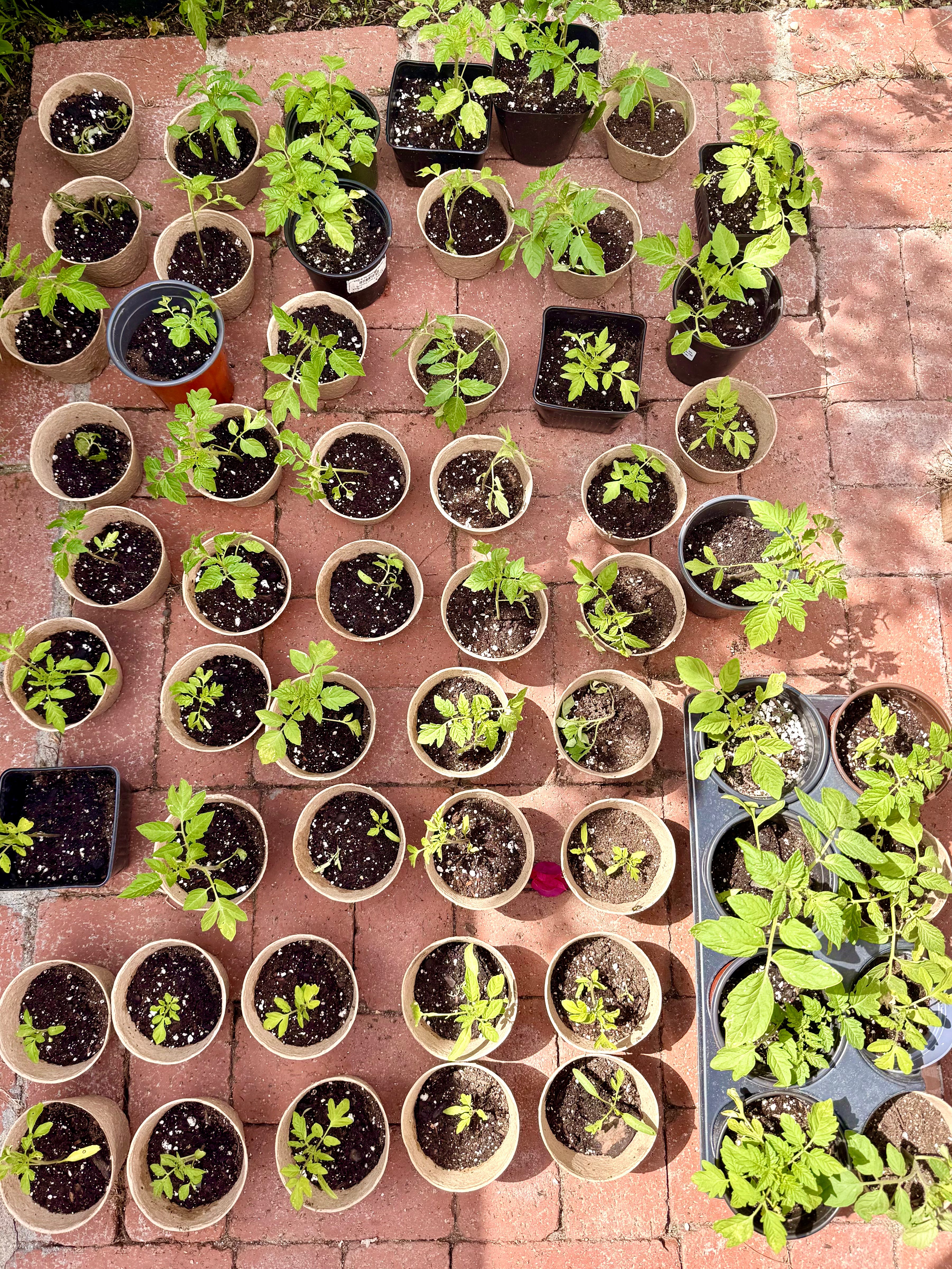
I brought seeds back from Campo de’ Fiori in Rome — San Marzano, cherry, and Principessa — and grew them, four or five seeds to an egg-carton container, on my windowsill for nearly a month. This week, they were finally ready to be repotted into their proper home. About fifty seedlings, each one moved individually into its own little pot, set up in the cleared courtyard.
There is something quietly profound about seeds soaking up sunlight on the other side of an ocean. Same sun, different hands, an ocean breeze, soil from somewhere else entirely. A little packet of potential life and joy that I nurtured into existence at this very time and place.
The Baking That Wasn’t Supposed to Happen
I don’t bake.
Let me be clear: it’s not a particular joy for me — mainly because I haven’t had much practice, which is saying something given that I’ve made a living as a food producer for over twenty years. Baking, with its ratios and patience and total refusal to be improvised, has always felt like a different kind of mental exercise than cooking. More rules. Less room.
There was a sourdough phase during Covid. After several hit-or-miss dense loaves, the practice was not deemed worth the effort.
But this week, with nowhere I had to be and nothing I had to start, I baked. Three things. In one week.
And here is what I learned: baking can be fast. Baking can be a Tuesday. It does not require clearing your calendar or making a whole event of it. Here’s what civilizations have known forever: there is a miracle that happens when you have flour and water. Sustenance in any number of carby, glorious forms.
Perhaps I have been making my life unnecessarily dramatic, and in doing so, preventing myself from a whole other category of creation and self-reliance.
So I made three things. Here’s what happened.
Jingalov Hats
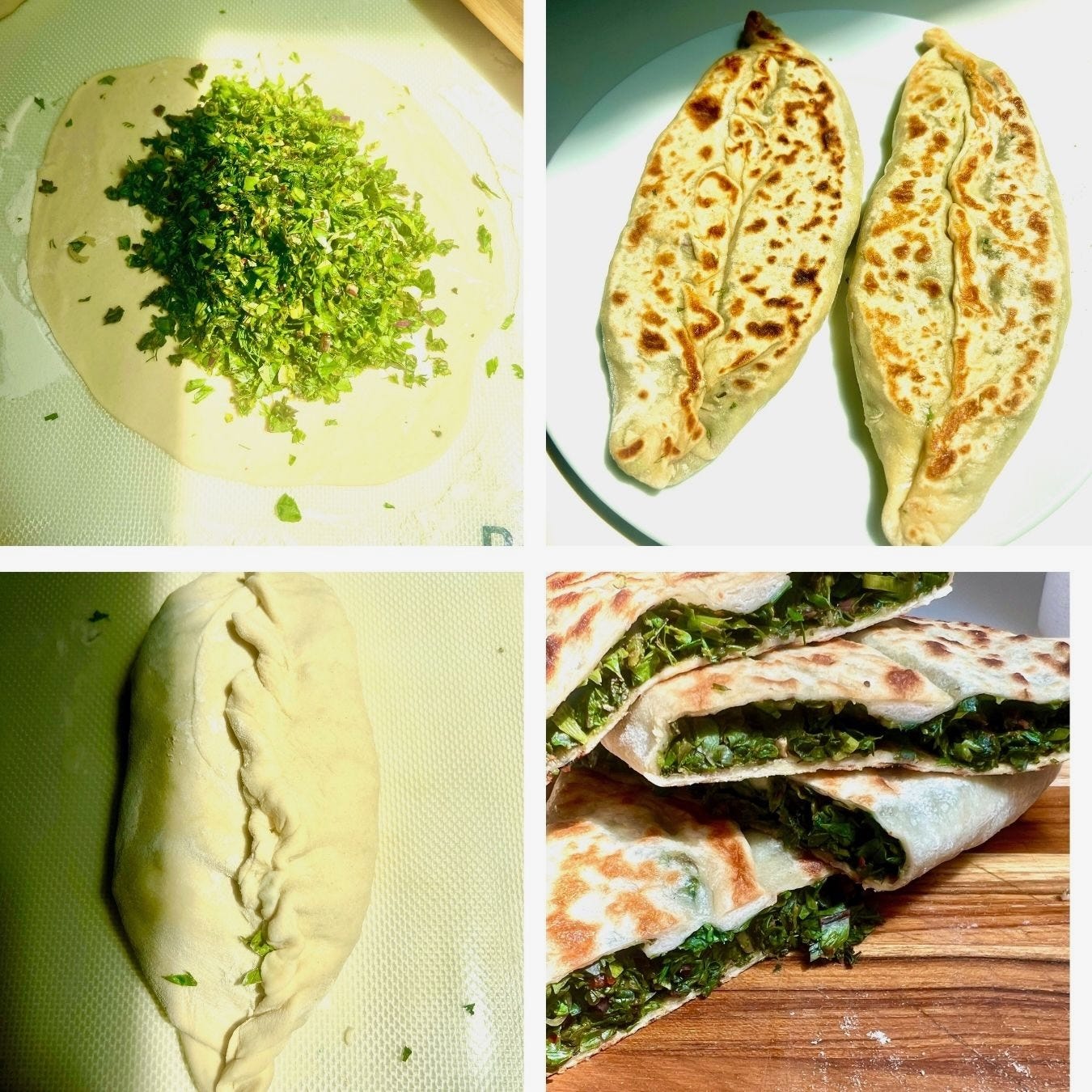
My friend Ara Zada — who co-authored the beautiful Lavash cookbook — taught me this recipe, and every time I’ve made it I’ve been struck by the simplicity of a warm wrap of fresh herbs. When the freshest herbs finally appeared at the market, I made them for my mahjong group.
Jingalov hats are Armenian flatbreads stuffed with greens: basil, opal basil, Thai basil, parsley, cilantro, spinach, arugula. They come together faster than you’d think, and the result is fragrant, grassy, deeply satisfying. The kind of thing that makes people ask, wait, you made this?
Yes. I did.
[⬇ Jingalov Hats Recipe — tap to open]

Roman White Pizza with Oxtail Massaman
This one is fully mine, in the way all the best dishes are: assembled from other people’s knowledge and your own audacity.
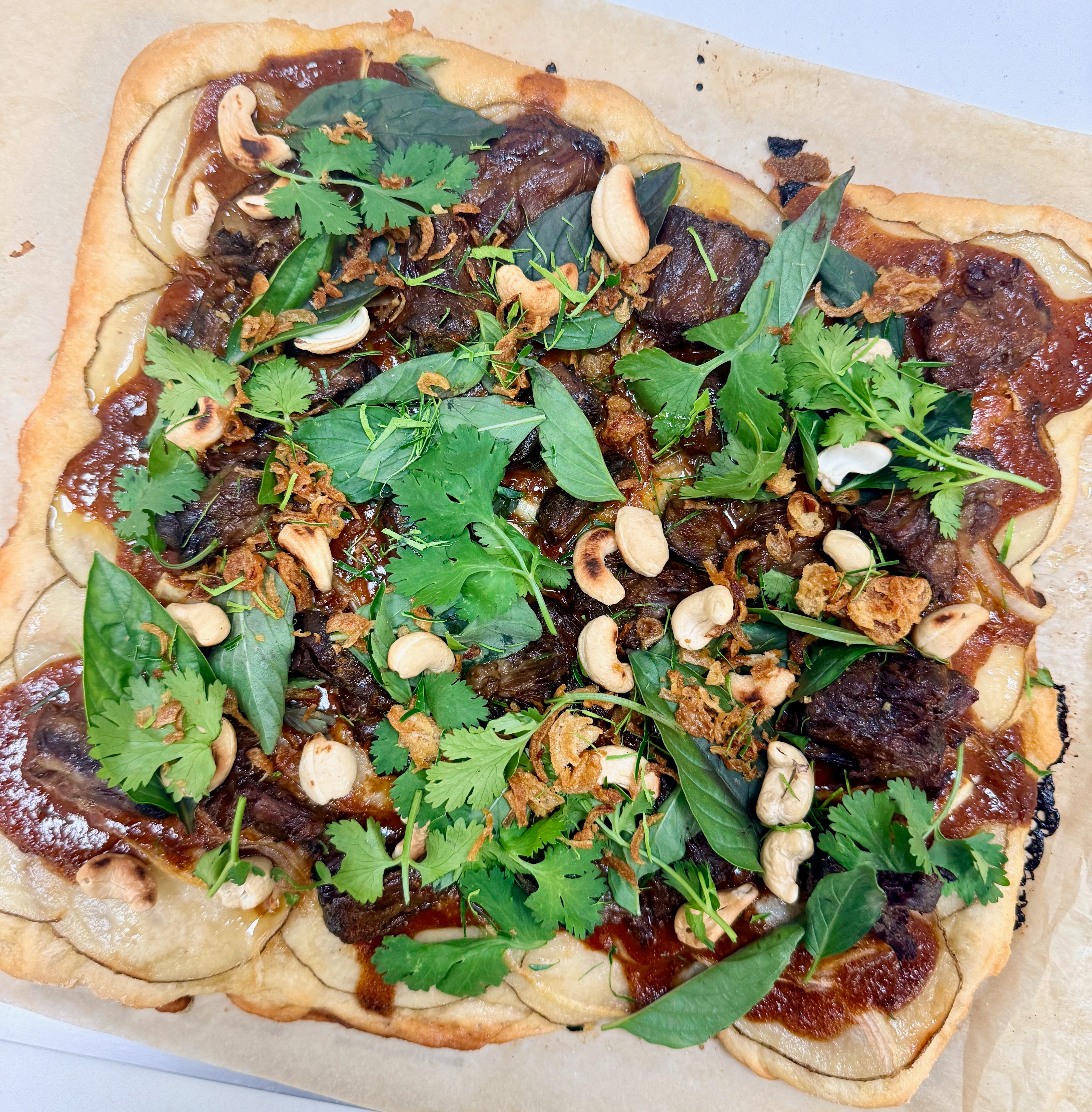
The pizza base comes from the Roscioli cookbook I carried home from Rome — a white pizza made with 00 flour and carbonated water, which gives the crust a texture that’s both crisp and airy, topped with paper-thin sliced potato. From there, I went somewhere off-script: oxtail massaman curry, finished with caramelized onion, finely sliced makrut lime leaves, cashews, Thai basil, cilantro, and fried shallots.
The combination works because massaman is the most Italian-adjacent Thai curry — warm spices, long braise, deep savoriness. Massaman usually has potatoes in its gravy, so the thinly sliced potato on the crust was a natural bridge. Crispy, almost like an Asian poutine pizza if you squint. And oxtail — unctuous, slow-cooked, falling off the bone — is a workhorse of Italian cooking too.
It made complete sense. Or at least, enough sense that I committed to it fully.
[⬇ Roman White Pizza + Oxtail Massaman Recipe — tap to open]

Biscuits (The Convert’s Journey)
I had never made biscuits before. Not a humble brag. Simply true. Biscuits felt like Southern grandmother territory, and I am neither Southern nor a grandmother.
On Instagram, Irene Wong — food producer, showrunner, chef, person who makes everything look like it was never difficult — makes the fluffiest, most mouthwatering biscuits. I finally decided to just do it.
Twenty minutes. Fluffy. Buttery. Gone.
I will be making biscuits again. Many times. Starting soon.
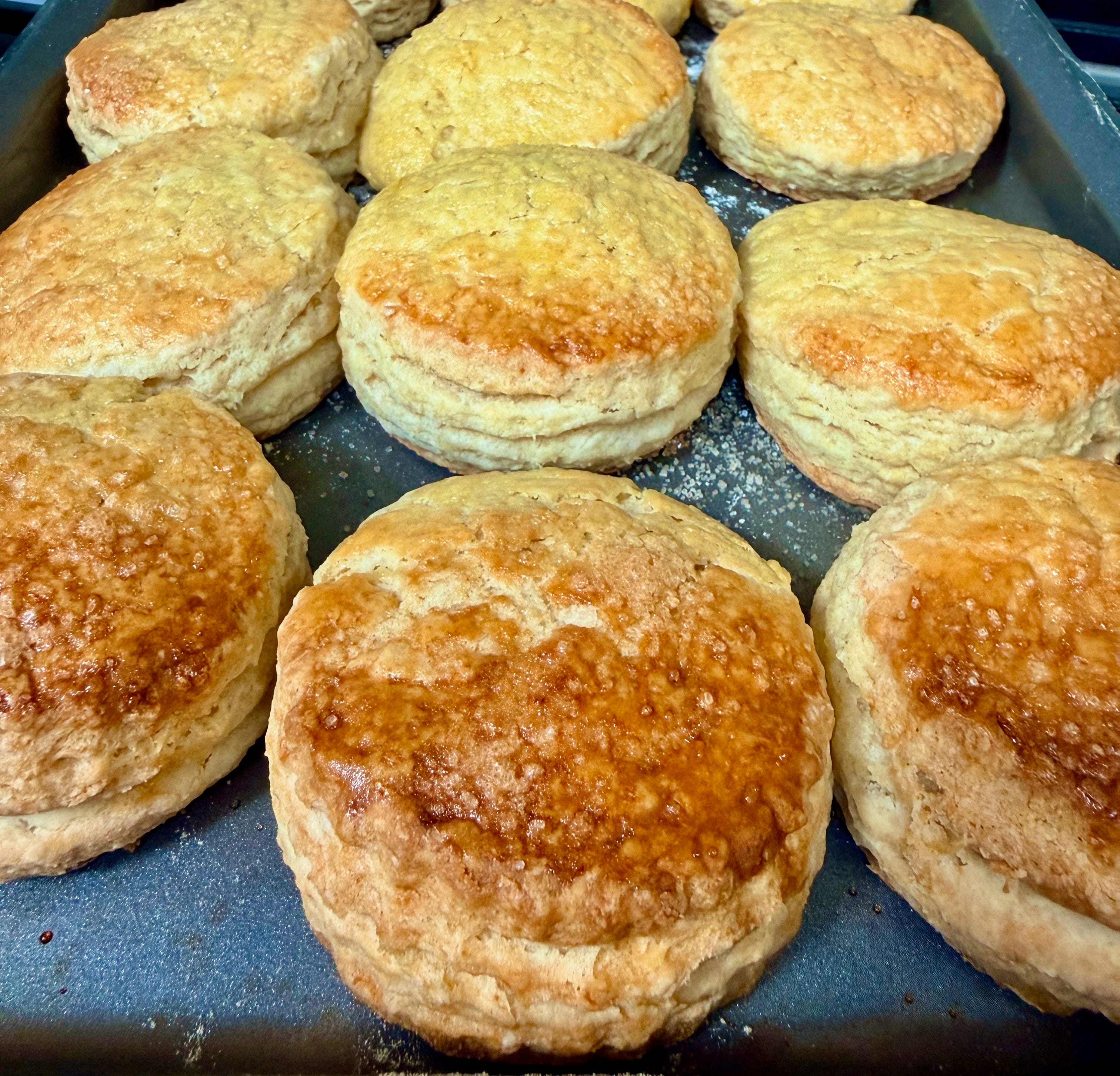
[⬇ Irene Wong’s Biscuits Recipe — tap to open]

What Replenishment Actually Feels Like
There’s something about completion that creative work almost never gives you.
A cut gets locked and then reopened for one more pass. A draft gets finished and then the notes arrive. The finish line moves. You live in a state of permanent incompletion, which is generative and also, quietly, exhausting.
But a weed, once pulled, is out. It will return. But not today.
A biscuit, once baked, is done.
A tomato seed, repotted, has moved to its next stage — from a small pot on a kitchen windowsill to a proper home in a courtyard, carrying with it the memory of a market in Rome where I stood in the March light, slipping seed packets into my bag like contraband.
The feedback is immediate and physical and unambiguous. Your hands did a thing and now it exists, warm and finished and real.
No one has to greenlight it. No one has to pick it up. The audience might be three people at mahjong night and some tomato plants. And that satisfaction — the quiet, private, uncelebrated satisfaction of having made something — is exactly as valid as finishing a script.
It goes out into the world. It affects people, a few people, your people. It is energy you chose to create and release.
This is, I think, what the Buddhist idea of right action looks like on an ordinary Tuesday in Santa Monica. Not grand. Not witnessed. Just hands doing something real, something complete, something that didn’t exist before you made it.
The devil doesn’t want you weeding your courtyard and baking biscuits you’ve never tried before. He wants you on the couch, half-watching something, too tired to begin and too restless to stop.
But your hands know better. Give them something to do. Something small, something completable, something that won’t be reviewed or distributed or given notes on.
See what they make.
What do you make when your brain needs to cool down? I’m not talking meditation or a walk — I mean actually make. Tell me in the comments.